Figure 1: Scatter plot in PCA space. Mahalanobis distance was calculated using the pharmaceutical molecules as the mean, and molecules within the threshold distance (indicated by the ellipse) were selected. This produces a dataset biased toward greater similarity to the target molecules, which achieved higher correlations than training on the full dataset.
Selected Projects
LSER parameter prediction for chemicals
This project developed LSER models to predict the partitioning of molecules from blood to blood vessel cells, serving as a proxy for the permeability of intravenous pharmaceuticals. A full data science pipeline was applied to a dataset of 3723 molecules, incorporating Mahalanobis distance-based clustering to isolate a pharmaceutical-relevant subset (n = 958). Four models: MLR, PLS, and LASSO were built and validated against LSER coefficients estimated from membrane permeability principles. Using Diazepam as a permeability reference, predicted relative permeabilities for pharmaceutical molecules averaged -0.35, -0.13, and -0.09 across the three model types. The resulting framework enables permeability prediction for any molecule whose LSER parameters can be sourced from PubChem, calibrated against a compound of known blood-to-vessel permeability. GitHub
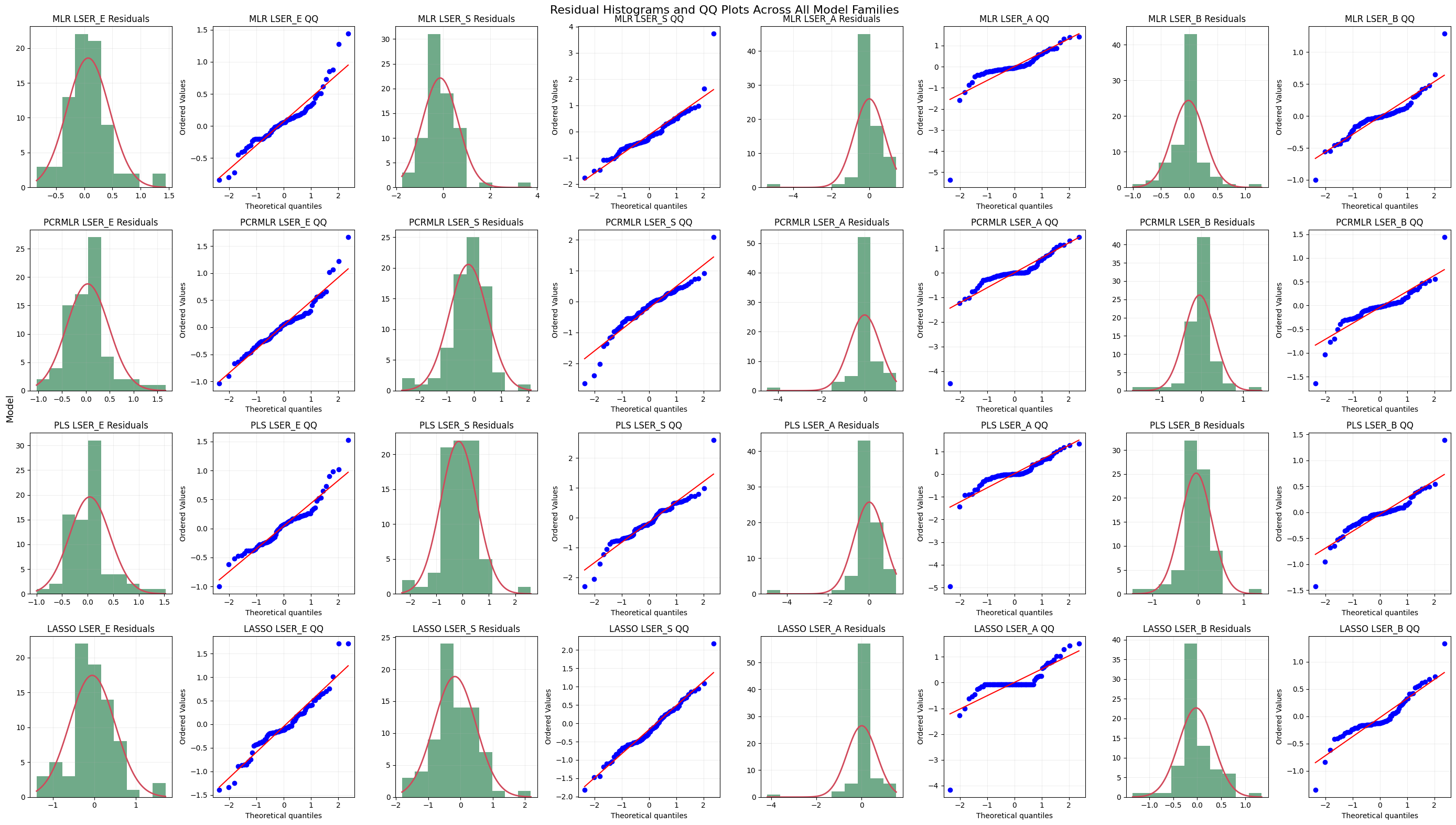
Figure 2: All models residual and QQ plots.